Quick facts
| Arabic name | الأقحوان (القحويان) |
|---|---|
| English name | Desert Chamomile (Uqhuwan) |
| Scientific name | Anthemis deserti |
| Family | Daisy family (Asteraceae) |
| Plant type | Annual wildflower |
| Height | 10 to 30 cm |
| Water use | Low |
Planting and harvest calendar
Best time to plant
October to December
It grows by itself after winter rain Flowering time
February to April
JanuaryFebruaryMarchAprilMayJuneJulyAugustSeptemberOctoberNovemberDecember
Planting timeHarvest or flowering
Times are general for the Saudi climate and may shift a few weeks by region: cooler in the highlands and the north, warmer on the coasts and in the south.
Description
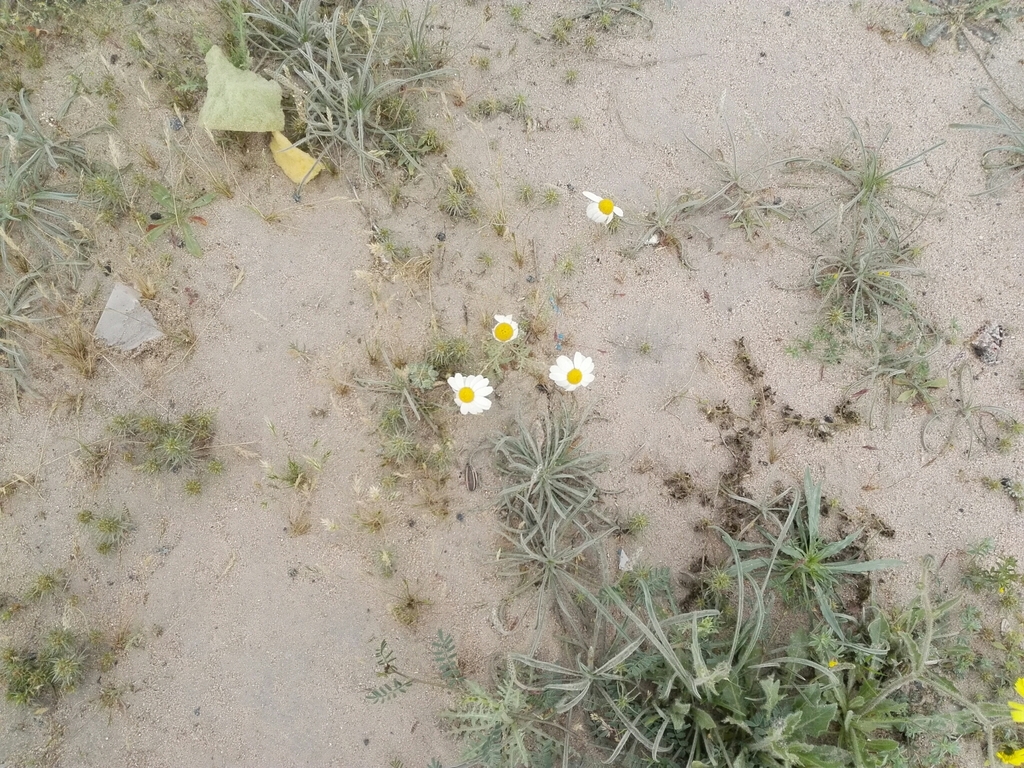
A small branching plant with finely divided leaves and white daisy flowers with yellow centers.
Where it grows
Grows in meadows and plains after winter rain.
Soil
Sandy or loamy soil.
Water and irrigation
Lives on rain.
Climate and light
Appears in winter and spring and dries up in heat.
Propagation
By seed.
Benefits and uses
- Brightens meadows in spring
- Food for bees and pollinators
- Grazing for livestock
- Attracts eco-tourism
Drawbacks
- Short-lived
- Depends on good rain
- Can cause allergy in some people
Important notes
Leave wildflowers in place so they spread seeds for next season.
Sources and references
The information was collected and checked from these scientific sources:
- Plants of the World Online (POWO) - Royal Botanic Gardens, Kew: Anthemis deserti
- Global Biodiversity Information Facility (GBIF): Anthemis deserti
- Chaudhary, S. A. (1999-2001). Flora of the Kingdom of Saudi Arabia. Ministry of Agriculture and Water, Riyadh.
- National Center for Vegetation Cover Development and Combating Desertification (NCVC)