Quick facts
| Arabic name | السمح |
|---|---|
| English name | Samh |
| Scientific name | Mesembryanthemum forsskalii |
| Family | Ice plant family (Aizoaceae) |
| Plant type | Annual succulent herb |
| Height | Usually 10 to 30 cm |
| Water use | Low |
Planting and harvest calendar
Best time to plant
October to December
It grows by itself after winter rain Harvest
Not harvested
JanuaryFebruaryMarchAprilMayJuneJulyAugustSeptemberOctoberNovemberDecember
Planting timeHarvest or flowering
Times are general for the Saudi climate and may shift a few weeks by region: cooler in the highlands and the north, warmer on the coasts and in the south.
Description
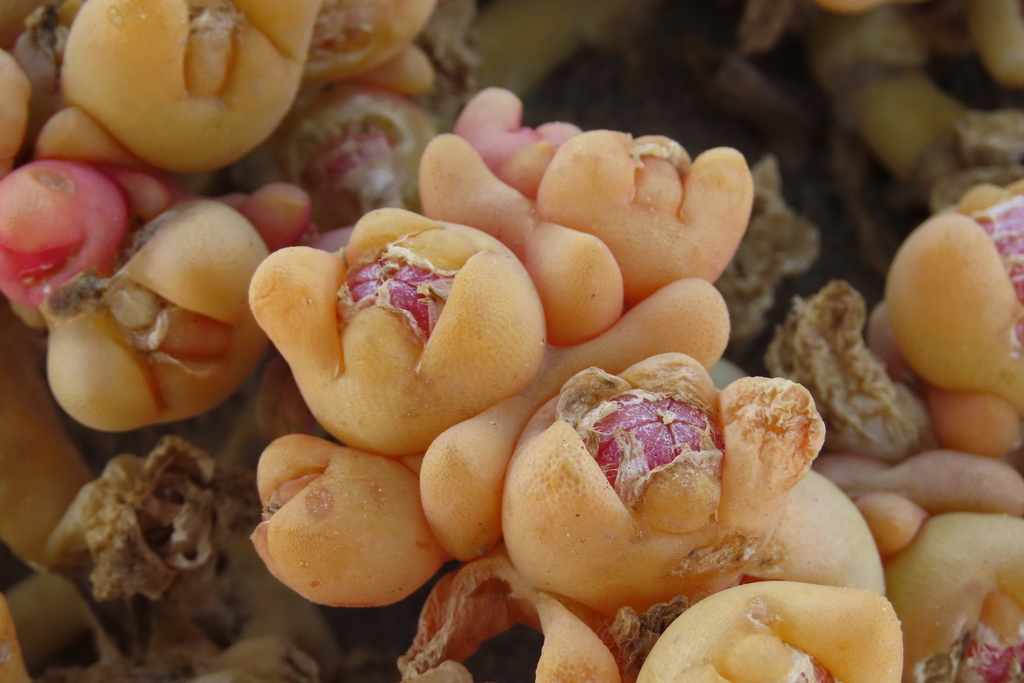
Fleshy leaves covered with shiny bumps, small white flowers, and capsules with very tiny seeds.
Where it grows
Grows after rain in Al-Jouf.
Soil
Sandy and loamy soil.
Water and irrigation
Lives on rain.
Climate and light
Sprouts after winter rain.
Propagation
From seeds.
Benefits and uses
- Seed flour is mixed with dates and ghee to make bakeela
- A traditional food with high food value
Drawbacks
- Only grows after good rain seasons
- Getting the seeds takes a lot of work
- Its numbers are at risk
Sources and references
The information was collected and checked from these scientific sources:
- Plants of the World Online (POWO) - Royal Botanic Gardens, Kew: Mesembryanthemum forsskalii
- Global Biodiversity Information Facility (GBIF): Mesembryanthemum forsskalii
- Chaudhary, S. A. (1999-2001). Flora of the Kingdom of Saudi Arabia. Ministry of Agriculture and Water, Riyadh.
- National Center for Vegetation Cover Development and Combating Desertification (NCVC)